

Last updated: March 2026
🔎 In this article: Dennis McGowan, Autura Principal Product Strategist, breaks down where and when challenges exist as towing and public safety teams coordinate efforts to keep communities moving and shares how integrated towing management software can provide the backbone for stronger, safter, smoother operations.
Towing is a public safety function that most people completely overlook — until something goes wrong.
For cities and agencies responsible for managing public safety, towing is an operation they engage with hundreds or thousands of times a month. And most of the time, they’ve been stuck coordinating it all through phone calls, radios, and a lot of patience.
Those coordination and operational challenges are exactly what we at Autura are working to solve. We build software that sits between public safety agencies and towing providers, integrating, and strengthening collaboration so that towing and recovery operations are safer, faster, and more transparent for everyone involved.
Let’s put a few common pinch-points across the towing lifecycle under the microscope. Often they’ve had to depend upon sluggish, error-prone coordination methods like phone calls and radio messages to handle complex dispatch and roadside service. This requires a lot of patience and, to put it lightly, is less than ideal for law enforcement officers, tow operators, and citizens alike.
The Problem: Phone Call Tow Request and Dispatch
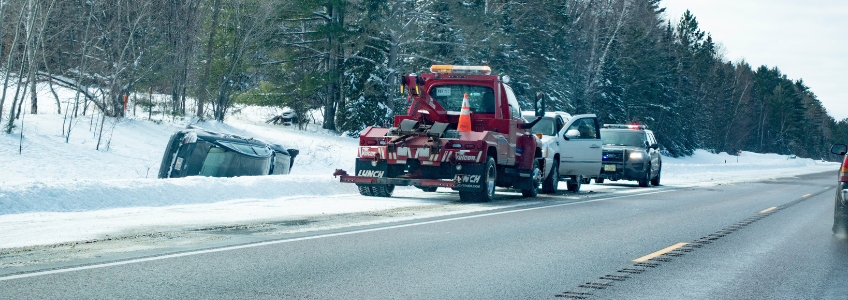
The scene: an officer arrives at the site of a two-vehicle collision. The responding officer radios dispatch, and dispatch starts calling down the tow provider rotation list. The first company didn’t answer. The second one’s trucks are already tied up with other jobs. Meanwhile, our officer and the motorist are in or near live traffic, just waiting.
AAA found that one in three drivers don’t slow down or move over when they see an emergency scene. The devastating impact? Forty-six emergency responders — including tow operators — died on the roadside in 2025 alone.
Every extra minute spent coordinating a tow is a minute someone is exposed and at-risk.
To save lives, we must compress the workflow and cut unnecessary, time-consuming steps.
A Solution: Sending the Job vs. Making a Call
Autura software routes tow requests digitally — straight from the officer on scene to the towing provider. No intermediary phone chain, voicemails, or emergency dispatchers playing phone tag during their already busy shifts.
By digitizing this process, agencies using Autura’s solution have seen responses times reduced to just 12.5 minutes. Dispatcher involvement in tow coordination dropped by as much as 90% — freeing 911 lines from thousands of tow-related calls per month. Nevada Highway Patrol reduced secondary crashes statewide by 45%, contributing to prevention of an estimated 5 fatalities and 25-40 serious injuries each year.
From the tow operator’s perspective, digital dispatching means job requests arrive faster and include better information. This visibility tells them what to expect to encounter on-scene before they leave the yard.
The Problem: Towing Program Decisions Based on Guesswork
Nobody in towing got into the business because they love dashboards. But here’s why having accurate, trackable data about a public safety agency’s towing program performance can make a difference.
The Solution: Towing Program Analytics
When a city can view charts displaying actual incident clearance times, release rates, tow fees, and service patterns, they can make decisions that improve numbers. And they can do this based on facts versus estimations, faulty memories, and, sometimes, the opinions of whoever’s loudest at the next council meeting.
This is great for agency leaders because it fuels stronger, more impactful program adjustments. And it’s also great for the towing operators they work with — because when great towing service is provided, the data reflects that. Fast response times, great completion rates, unwavering reliability — integrated towing management software documents and displays it, highlighting great working relationships and making it easy for decision-makers to renew when contracts come up for review.
Nevada Highway Patrol is a solid example. After implementing Autura’s government solution suite, they saw their radio traffic and dispatch, call volume drop substantially. Tow operators on-rotation started getting dispatched faster and were provided with better information about the towing job ahead. There was less waiting and fewer miscommunications– enabling the entire program to run smoother for everyone involved.
A Positive Side-Effect of Smoother Towing Operations: Getting People Back to Their Cars
There’s a positive downstream impact of more integrated towing processes that many agencies overlook. After a vehicle is towed from an incident scene, drivers must track it down – often a frustrating process. Most times, these frustrations are directed at the towing company — not the city or the officer who called for the tow.
Autura’s towing management software – connecting, coordinating, and tracking each stage of the towing lifecycle – also provides a database lookup service dedicated to helping drivers locate their vehicle and understand appropriate next steps to recover it.
This matters to towers more than you may realize. Faster vehicle releases mean faster payment, less storage lot congestion, and fewer disputes or angry calls to the office.
How Software that Connects the Towing Ecosystem Works
It’s worth understanding what Autura is – a software and technology company. We provide the tools for towing operators and government agencies to manage their operations, rotations, and impound lots more effectively. Autura does not own tow trucks, operate impound lots, employ tow operators, or set towing or storage fees.
We provide towing business owners at any scale – from single-truck to enterprise operations – and state and local public safety agencies with a foundation of towing management technology that powers their essential work. Our software supports the towing professionals doing the work, running the trucks, and serving the public.
Our technology connects their operations to agencies requesting towing service — so everyone can complete jobs faster and with less friction.
Government agencies like Nevada Highway Patrol and others are investing in these tools because their communities are asking for it — faster and safer response, more accountability, and better outcomes. When towing programs run well, the towing companies operating within them gain a stronger position with more predictable volume, tighter workflows, and a documented track record that supports (not hides) their valuable work.
📆 Schedule an initial conversation with our team to learn how Autura’s government towing solutions can support your agency and tow provider network.