
Last updated: April 2026
🔎 In this article: Dennis McGowan explores why roadside safety can’t rely on laws and enforcement alone. Through a personal story, national data, and proven education models, he shows how early driver education reduces roadside exposure, saves lives, and makes every towing and public safety investment more effective.
What would make our roads safer for everyone? Safety laws help. First responder and roadside work training help. Better lighting that illuminates hazards, accidents, and unexpected impediments. Scene securement and high-visibility gear — yep, they help, too.
But the biggest thing that will keep everyone safer on roadsides is less time spent on the roadside. For officers, for tow operators, and motorists. Why? Because every second of exposure is a second where something can go wrong.
A Personal Story to Illustrate Daily Dangers Roadside Workers Face
Anyone who has worked the road long enough has a story like the one I’m sharing here.
The Scene: sometime between 2012 and 2013, I was on my back under a truck with a snapped driveshaft beneath the Brooklyn Bridge on the Brooklyn-Queens Expressway (BQE). It was late afternoon. The sun was low, and rush-hour traffic intensity was growing, with cars and trucks pushing 50+ miles per hour trying to beat the inevitable gridlock.
The Setup: The shoulder was barely wide enough for the disabled truck, let alone my rig — hooked up in front. I needed to disconnect the shaft so the truck would roll, and the only way to make that happen was from underneath.
The Story: While flat on my back, a tractor-trailer clipped the mirror of the truck above me. The vehicle shook. Glass and plastic showered me. That tractor-trailer never stopped. I froze for a second, then finished the job. I was lucky… but not everyone is.
Ask anyone who has spent time working on the road and they will have a story just like this one. These close calls …happen every day, everywhere, at any time, and in any weather. It’s what makes solving the roadside safety problem so difficult.
The Roadside Safety Law Compliance Gap
The industry and the government have put significant effort into roadside safety legislation.
- All 50 states now have some version of a Move Over law.
- A bipartisan Senate resolution elevated the issue at the federal level in late 2025.
- Equipment and training have improved
- The categories of workers covered by these statutes have expanded over the years.
Despite all of that, AAA research found that roughly one in three drivers still ignore Move Over laws, and an average of two emergency responders are killed every month because of it. Devastatingly, fatalities among roadside assistance providers — tow operators included — appear to be trending upward rather than declining.
The problem lies not with the laws themselves; this issue is that most drivers have no real understanding of what’s happening and the risks involved as they drive past a roadside scene. Motorists haven’t been taught about:
- Scene clearance practices and procedures
- Who and how many roadside workers are present and busy getting people to safety and debris cleared to keep traffic moving and prevent further accidents
- How much changing lanes to give first responders more room increases the safety of everyone involved.
- How fast a bad situation can turn into a disaster when motorists don’t follow Slow Down, Move Over laws.
That driver on the BQE who clipped the mirror above me almost certainly had no idea anyone was under that truck. There was no malice involved — just a complete lack of awareness.
Law enforcement can punish noncompliance after the fact, but it does nothing for prevention. If we understand the dangers and risks those roadside workers face, we can prevent these situations before anyone gets hurt or punished. This requires education… and not the kind aimed at tow operators or law enforcement, who already receive extensive training.
The education gap we need to fill is with 230 million licensed drivers.
A Proven Roadside Safety Education Model
School programs, crash test dummies on television, and the “Click It or Ticket” campaign all worked together over time to build the kind of understanding that made compliance automatic rather than optional. The law created the requirement, and education created the behavior.
We have the requirement piece with laws about roadside safety. What we’re missing, until recently, is a serious educational effort to build that same cultural understanding among everyday drivers.
Some of the most important work on that front is coming from within the towing community.
In a recent Tow Trend Podcast episode, Shelli Hawkins and I spoke with Cindy Iodice, founder of Flagman, Inc.
Cindy’s brother Corey was a tow truck operator in Connecticut who was struck and killed in 2020 while helping a disabled motorist on the Merritt Parkway. He was doing what he did every single day. Motivated by her personal loss, Cindy built Flagman, a K-12 outreach program that brings roadside safety education into schools across the country. Students go through assemblies where they:
- Get first-hand knowledge of what real crash scenes look like
- Learn who responders are and what they are doing
- Come away with a concrete understanding of what Slow Down, Move Over laws mean.
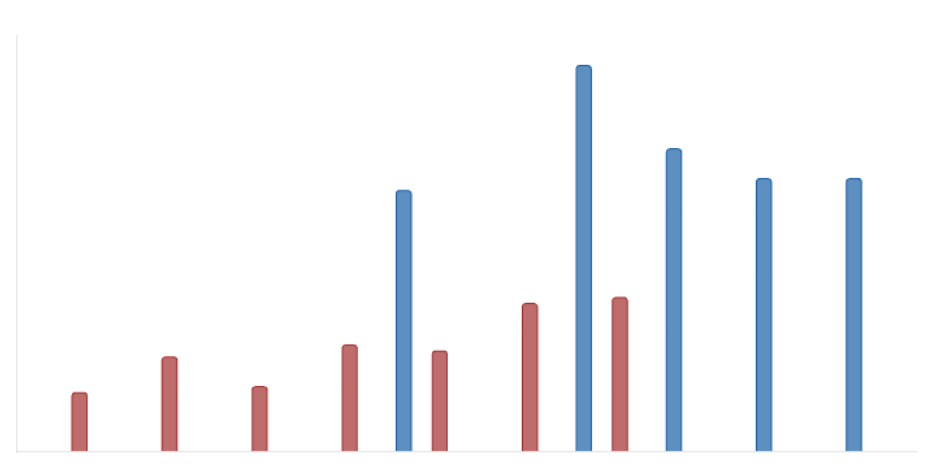
In pilot programs, student awareness went from roughly 60% to over 97% after a single assembly.
Those students will be drivers in five, ten, and fifteen years. By the time someone is passing a roadside scene at highway speed, the window for education has closed. The opportunity to reach that driver was years earlier — programs like Flagman are proving that the education model works when someone commits to building it.
Connecting the Education-Boosts-Safety Dots for Government
The reason roadside safety education matters, even beyond the towing industry, is government agencies managing towing programs bear the downstream consequences of an uneducated driving public every day.
When drivers don’t know how to behave around a roadside scene:
- Officers requesting tows spend more time exposed on the shoulder waiting for service.
- Dispatch centers field more calls because scenes take longer to clear.
- Secondary crash rates climb because the original scene stays active longer than it needs to.
All those outcomes are measurable, and all of them trace back to the same root cause.
Agencies leaders who invest in technology to modernize their towing programs, reduce response times, and improve data visibility across the towing lifecycle are solving real and important problems. But technology optimizes the process only once it’s in motion. Public education, on the other hand, addresses the conditions surrounding that process and makes every other investment perform better. Shorter exposure times come from faster dispatch, yes, but also from a driving public that knows how to slow down and make room.
Conclusion and a Call to Action
The good news? Legislation, technology, education, and daily operations are components of the same system — and the legal framework is in place. Likewise, the technology to connect stakeholders across the towing lifecycle is more capable than ever.
Now, organizations like Flagman are demonstrating that public education can move the needle on awareness in ways that enforcement alone has not.
The opportunity in front of this industry is to coordinate all these roadside safety efforts — not treat them as separate initiatives. A student who learns about roadside safety today becomes a driver who moves over tomorrow. That has a direct impact on every officer, tow truck operator, and motorist who depend on the people around them making the right decisions at highway speed.
The goal is for everyone to spend less time on dangerous roadsides. Bringing the driving public into that effort through education is how we can get closer to achieving it.
Look for our conversation with Cindy Iodice in this episode of The Tow Trend Podcast. We talk about Corey, the work Flagman is doing in schools across the country, and what the future of roadside safety education looks like for this industry.